
Elucidating Culture: Mali’s Magnificent Mogul
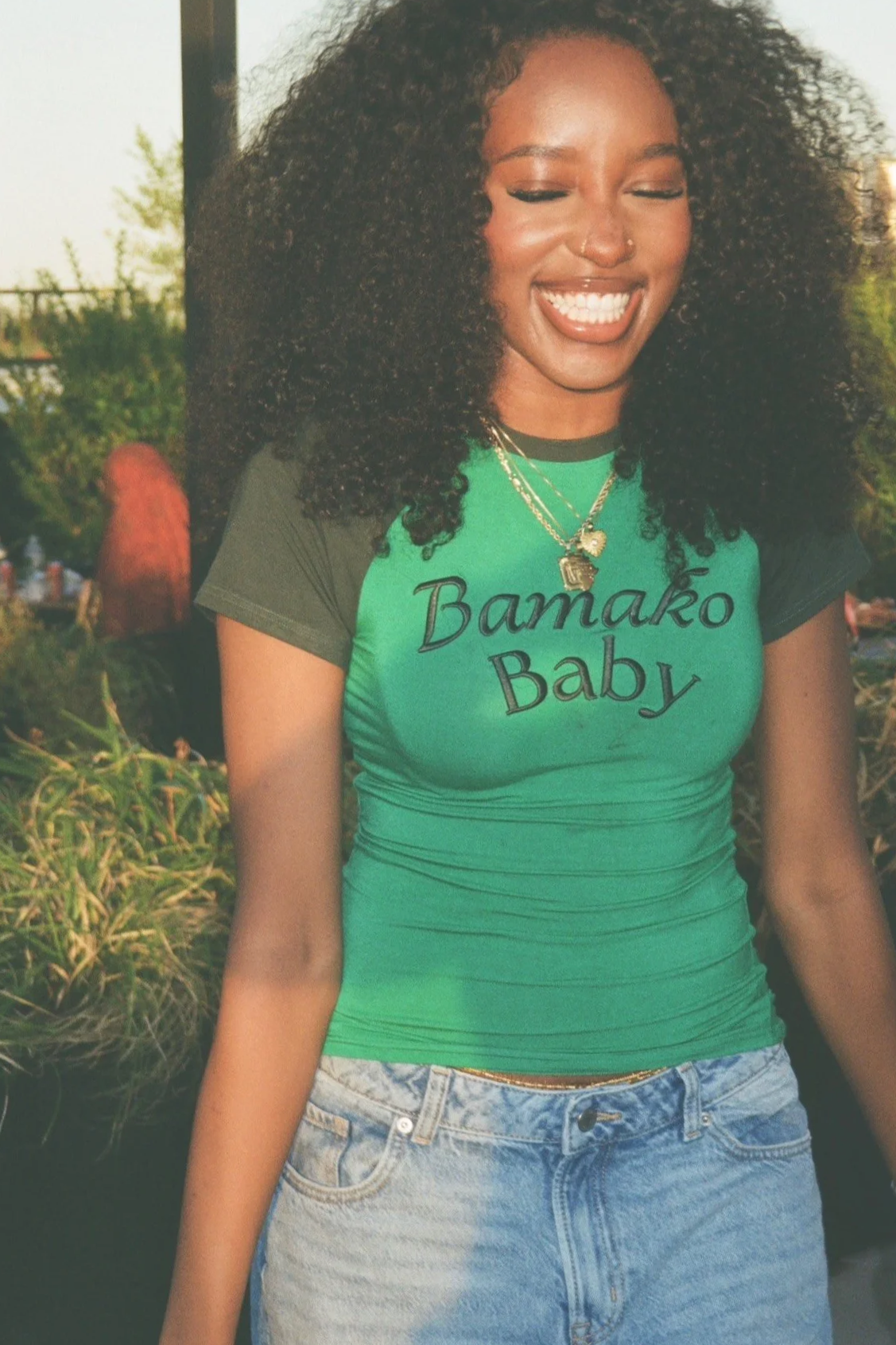
Entrepreneur and project manager Mantjita Camara combines her STEM and creative interests to represent her culture.
By Leila Biola Olukoga
03/23/2026
In Mali, the country’s deep-rooted heritage and cultural legacy culminate in a rich, unique society. With over 80 languages, the intersection between languages like Bambara and Maninka combines to make the most remarkable expressions. Among the many popular colloquial phrases in Mali and across Francophone West Africa is Jolie Den, which directly translates to “Pretty Girl.”
For entrepreneur and assistant project manager, Mantjita Camara, this phrase resonates deeply with her through her passions and culture, so much so that she created a clothing business under the moniker.
Camara launched her business, Jolie Den, just over two years ago with her co-founder and cousin, Fatoumata Soumare, and has since built a global enterprise. Born and raised in Brooklyn, NY, as the daughter of Malian immigrants, Camara’s cultural apparel memorably and fashionably displays her and Soumare’s Malian heritage through a modern lens.
“It took me an extremely long time to build confidence in myself and where I came from and who I am,” Camara said. “The women are so unequivocally themselves and like you can never tell them about themselves at all. So that was something that was really inspiring to me and my cousin.”
Since its inception, Jolie Den has established itself as an international business, selling pieces from the United States to France and Germany. Some of Camara’s most popular pieces include the Malian Independence Day t-shirt, the Bamako Baby Tee, and, most recently, an AFCON-inspired jersey. Last year, Jolie Den sold items in the Brooklyn Museum gift store in collaboration with an exhibit commemorating the well-known Malian photographer Seydou Keita, marking his largest North American exhibit.
Camara said that Jolie Den has inspired Malians around the world to have pride in their culture.
“I really wanted to find where we existed online and in the cultural zeitgeist,” Camara said. “I think us putting ourselves [online] caught the eyes of other Maian girls that are like ‘oh my gosh, there’s a brand for girls like me.’ We're yearning to be seen and to make a cultural impact and all that and there are other Malian and West African girls that want to be a part of that same story.”
In addition to her clothing brand, Camara works as an assistant project manager at a civil engineering firm. Camara said that despite her two professional interests being quite different, her motivations for pursuing both are similar.
“It does feel like two different worlds, but I'm motivated by the same thing in both, which is to just increase access and visibility to things that I think are extremely important,” Camara said. “I just saw that there was a hole in Malian representation and I really want to be able to push Malian creativity out there. I want to do that both in my engineering career and also in my creative career.”
In the near future, Camara said that she hopes to become a professional engineer and urban planner and hopes to encourage other Malian and women of color to pursue their dreams in the STEM and creative fields.
“I really do believe that our voices do dictate the major changes that could happen, and that's something that's just well known in technology and engineering too,” Camara said. “Like infrastructure becomes better when there's more diverse voices contributing to how, what and who things are being built for. So we contribute something that others can never contribute because we do really important work.”
